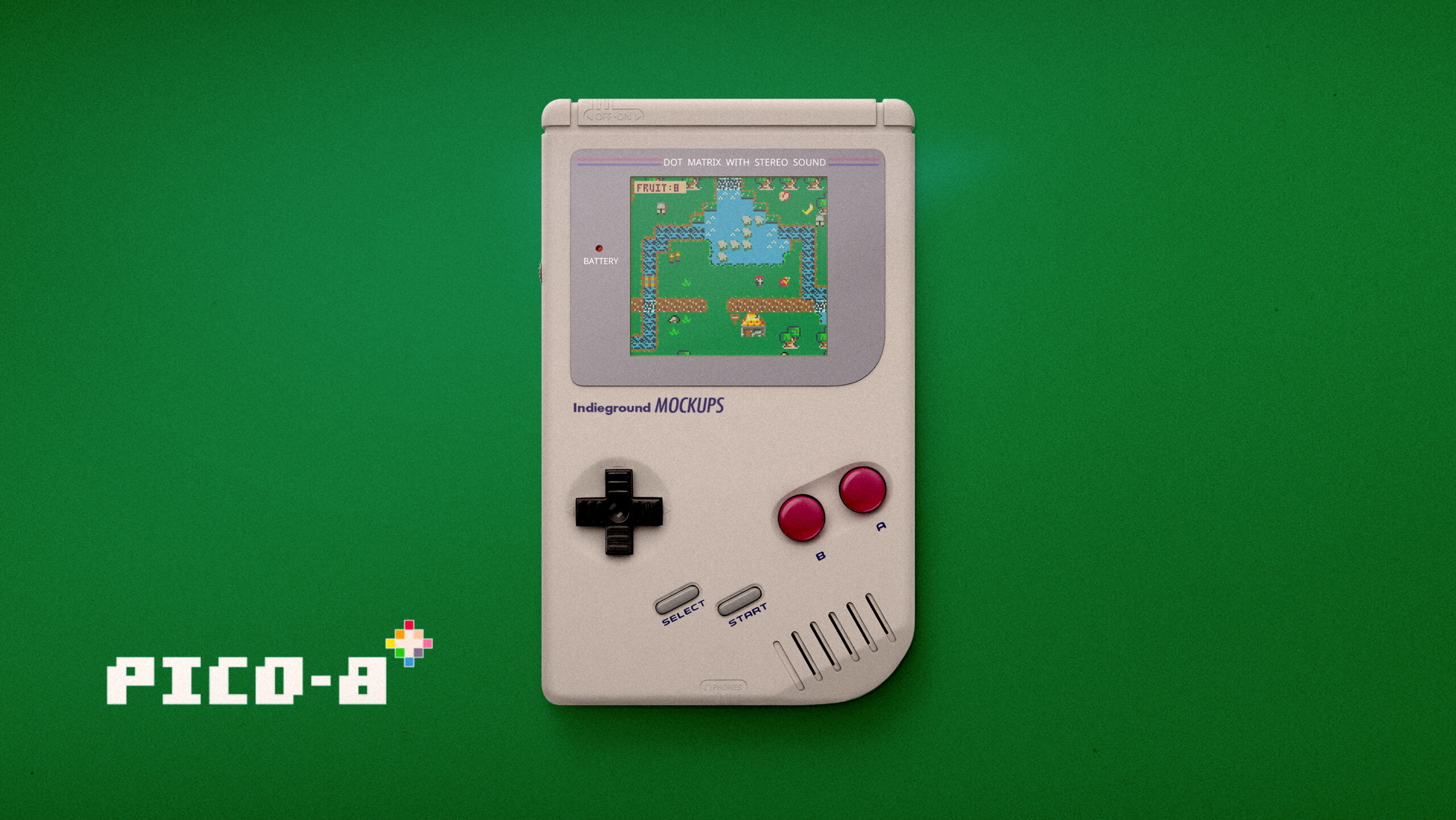
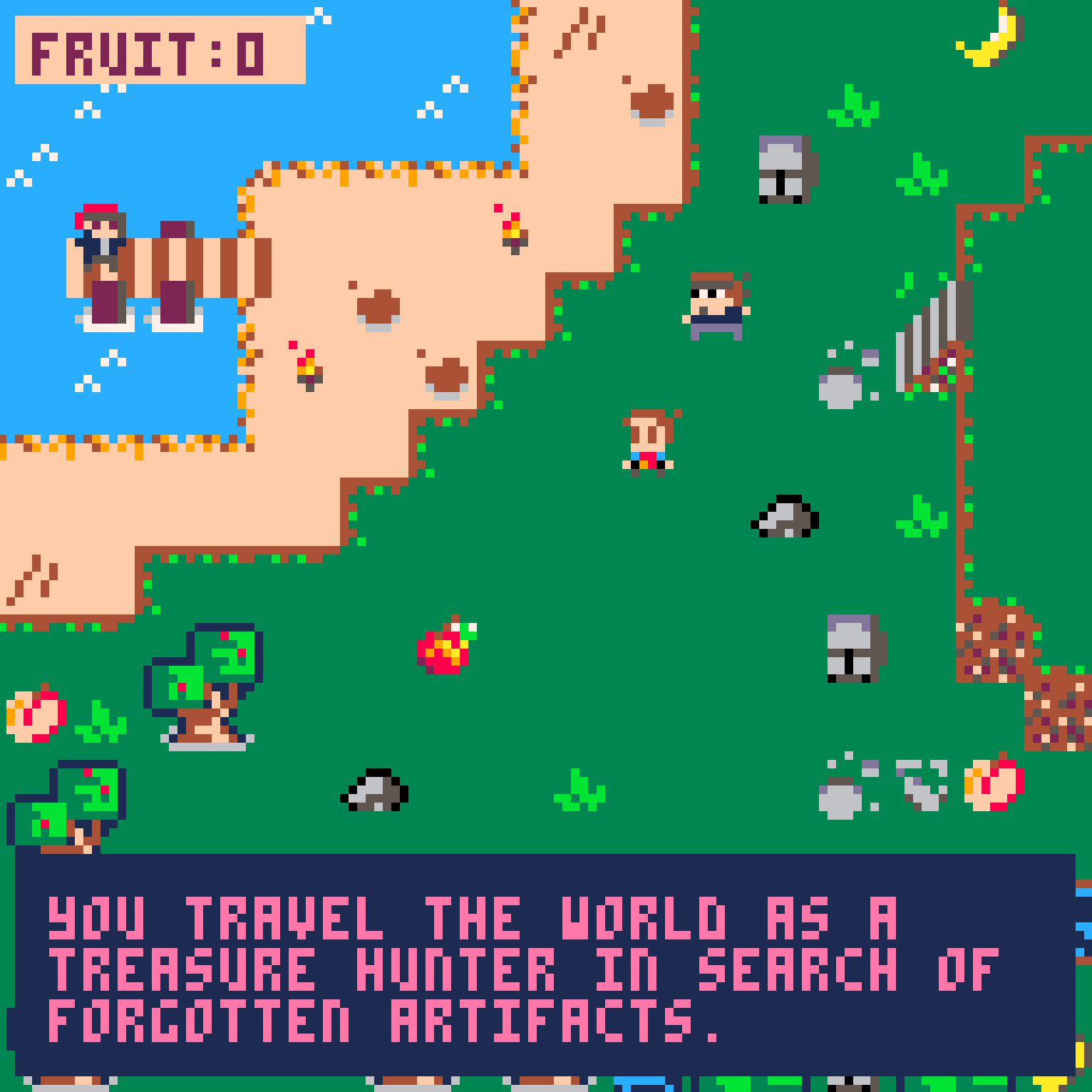
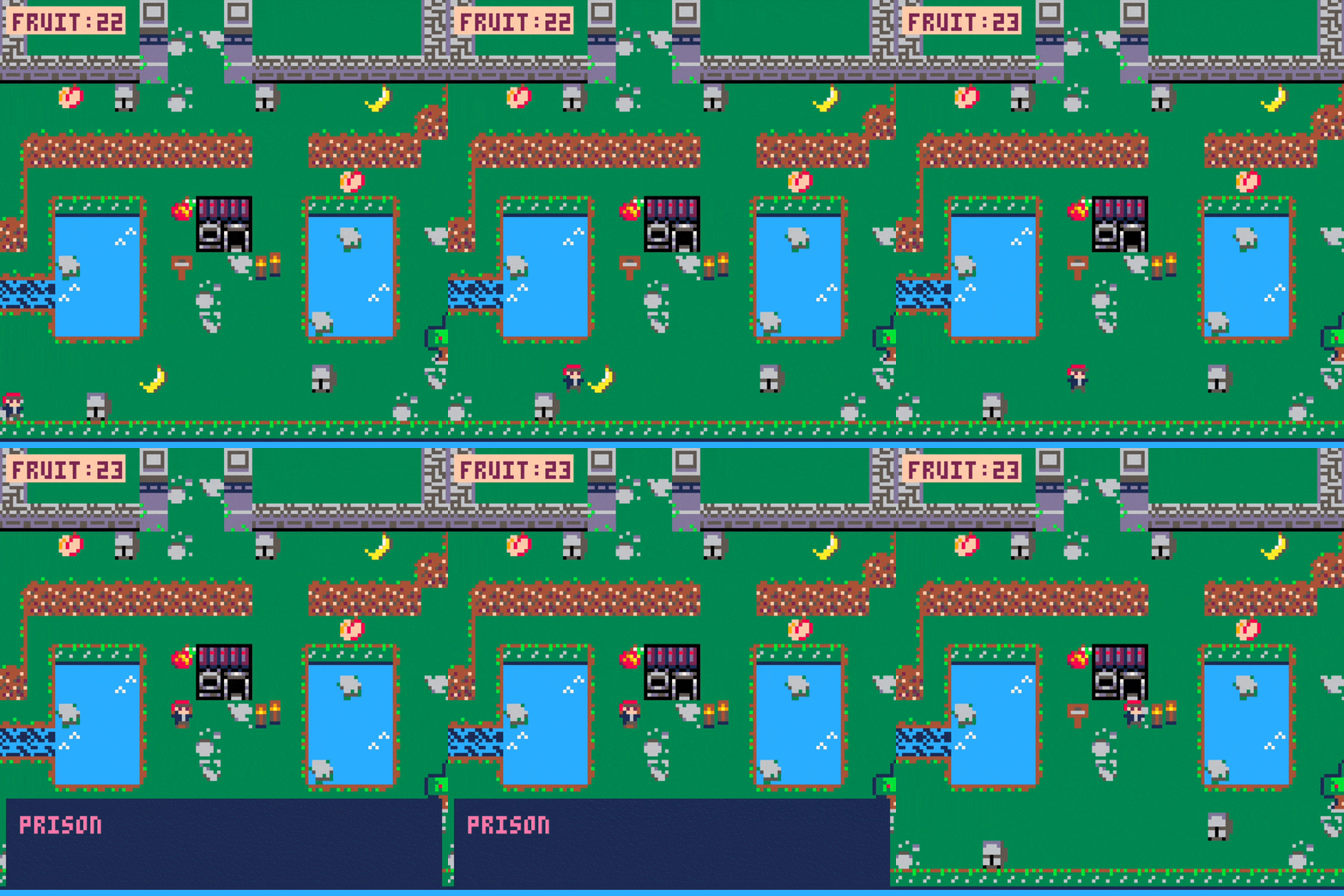
Treasure Hunter is a small top-down pixel adventure game created with the fantasy console PICO-8. The project was part of an interaction design class where the challenge was to design and build a playable game within the technical limitations of the platform.
Players explore a small island as a treasure hunter searching for a stolen sacred crystal. By talking to characters, collecting items, and unlocking new areas, the player gradually uncovers how to return the crystal to the temple and restore peace to the island.
Game Design, Pixel Art, Programming
March – May 2021
University Project · Interaction Design
PICO-8 Fantasy Console
The goal of the assignment was to design a complete playable game experience using PICO-8.
The platform intentionally limits developers to very small screen resolutions, limited colors, and restricted memory. Because of these constraints, the challenge was to create a clear game structure, intuitive explorations, and a coherent narrative within a very small technical framework.
The game is designed for casual players who enjoy retro-style adventure games, especially those interested in classic pixel aesthetics and simple exploration mechanics.
Because of its straightforward controls and narrative hints, the game can be understood quickly and played without prior experience.
I designed a 14-screen top-down adventure game where the player progresses through exploration, dialogue, and small tasks.
The player arrives on a mysterious island where the inhabitants explain that their sacred crystal has been stolen from the temple. Without it, they cannot leave the island.
To solve the problem, the player must explore the island, talk to different characters, gather resources, and unlock hidden locations.
Through these interactions, the player slowly discovers where the temple is located, how to obtain the key, and where the crystal is hidden.
Players move through the island and discover new areas.
Dialogue with NPCs provides hints and directs the player toward the next objective.
Certain areas require tools or keys to access. For example, the player receives a sword that allows them to defeat snakes guarding the crystal.
Fruits scattered across the island can be collected. They function as a small resource system and help structure the game progression.
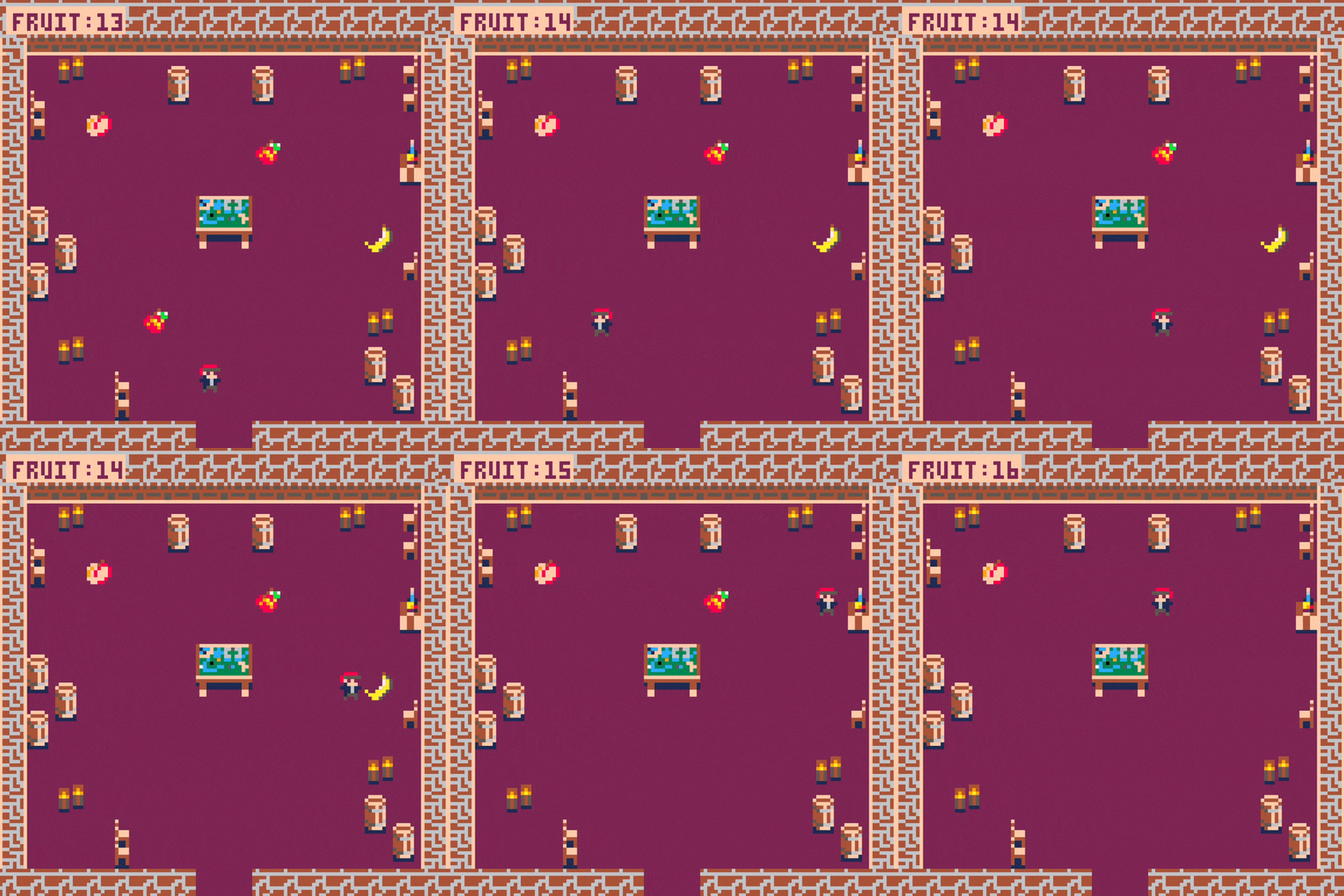
The island is divided into connected screens, each representing a different location. The screen-by-screen structure keeps navigation simple while still creating a sense of exploration.
Each area uses simple visual cues to communicate its function. For example, the temple area includes ruins and stone structures, while the bar and shop contain interior objects that suggest their purpose.
The result is a small but complete adventure game that demonstrates how a full narrative and gameplay can be created within strong technical limitations.
The project helped me better understand interactive storytelling, game progression systems, designing within technical constraints, and combining visual design with gameplay mechanics.
Designing this game required balancing story, exploration, and technical restrictions. Working with PICO-8’s limitations pushed me to simplify mechanics and focus on clear interaction and visual communication.
The project was an early step into combining design, storytelling, and programming within interactive experiences.