Modern life often prioritizes productivity over well-being, leaving little time for self-care or social engagement. Many existing solutions rely on heavy gamification or require long-term commitment, which can feel overwhelming.
Onni takes a different approach by focusing on small, achievable actions that fit naturally into daily routines. The aim is to lower the barrier and make positive behavior more accessible.
Target Audience
The app is designed for adults between 20 and 40 who are balancing work, studies, and personal life.
They are often short on time, experience stress, and are looking for simple ways to feel better and reconnect with others.
Research
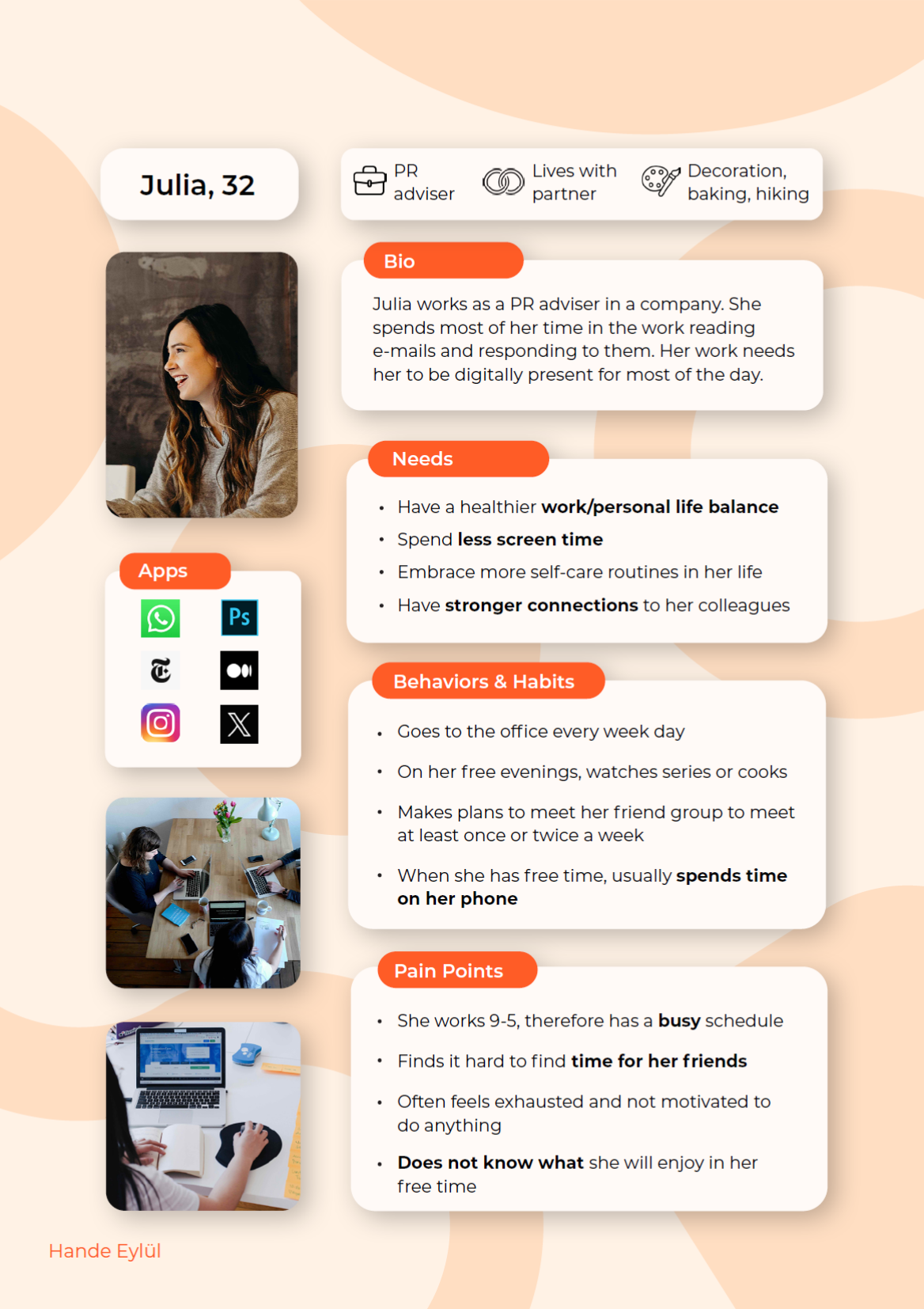
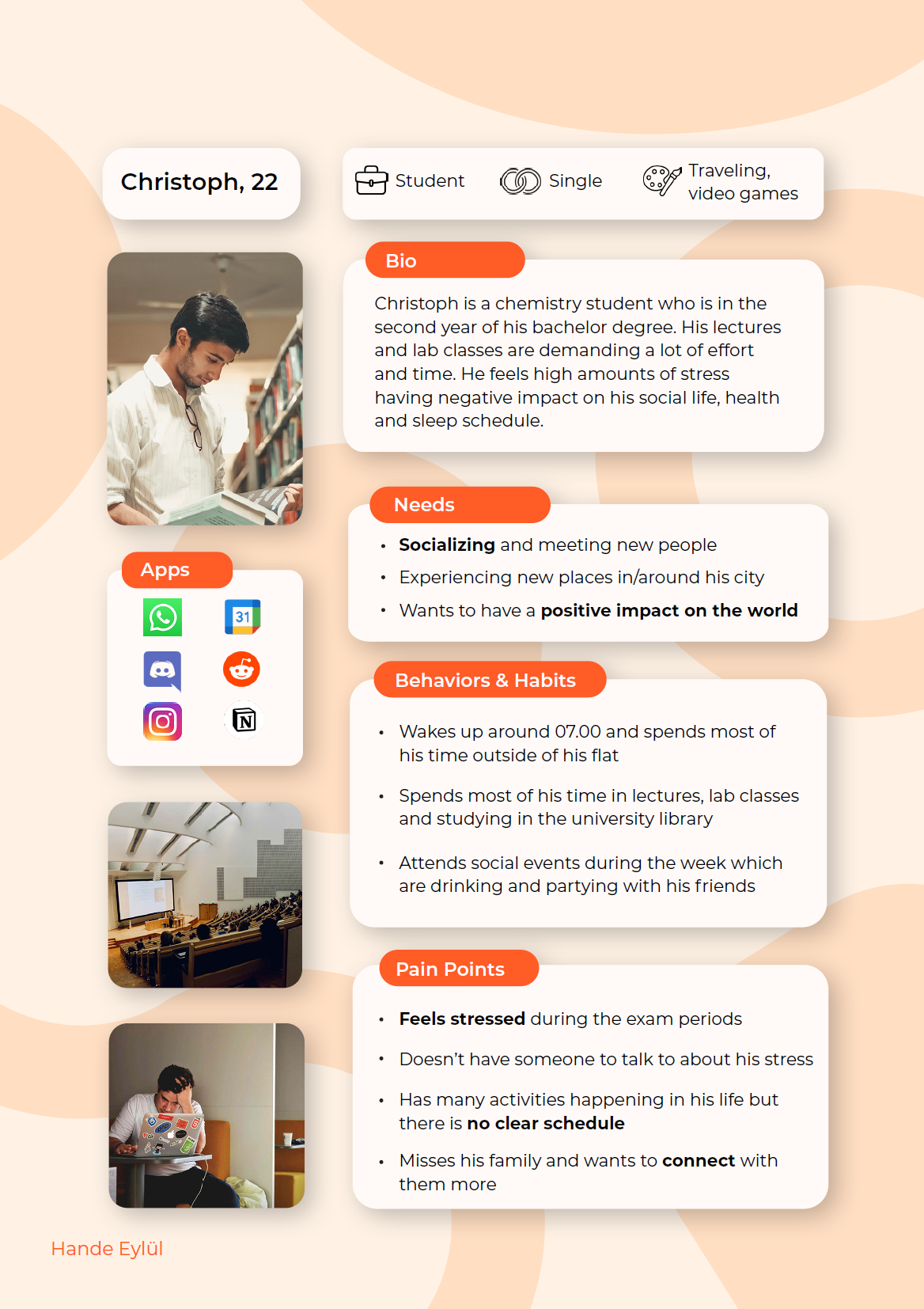
The main UX designer started with a competitor analysis and user personas to understand existing solutions and user needs.
While some apps focus heavily on gamification or long-term goals, we identified a gap for simple, low-effort daily actions.
User journeys helped us map moments where small interventions could make a difference, especially during stressful or routine-heavy days.
Key Insights:
• Simplicity is more motivating than complex systems
• Small actions are more likely to be integrated into daily routines
• Users want flexibility, not strict commitment
• Positive reinforcement increases engagement
User Flow
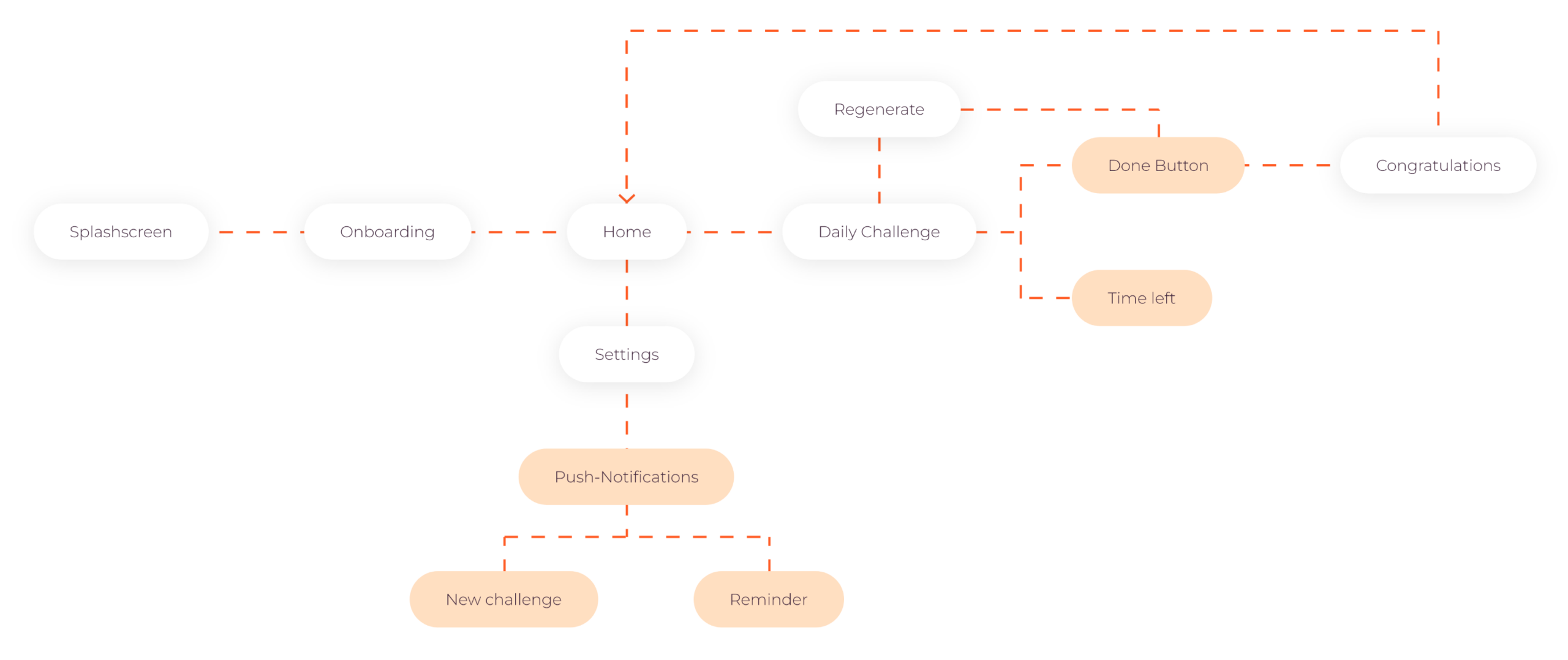
Based on research and team input, I developed the user flow to define the core experience and prioritize essential features.
We explored a wide range of ideas, including gamification elements, but decided to focus on the most impactful and realistic features. The final flow centers around onboarding, the daily challenge, and a simple completion flow.
Concept
The core idea was to create an app that encourages small, meaningful actions through daily challenges.
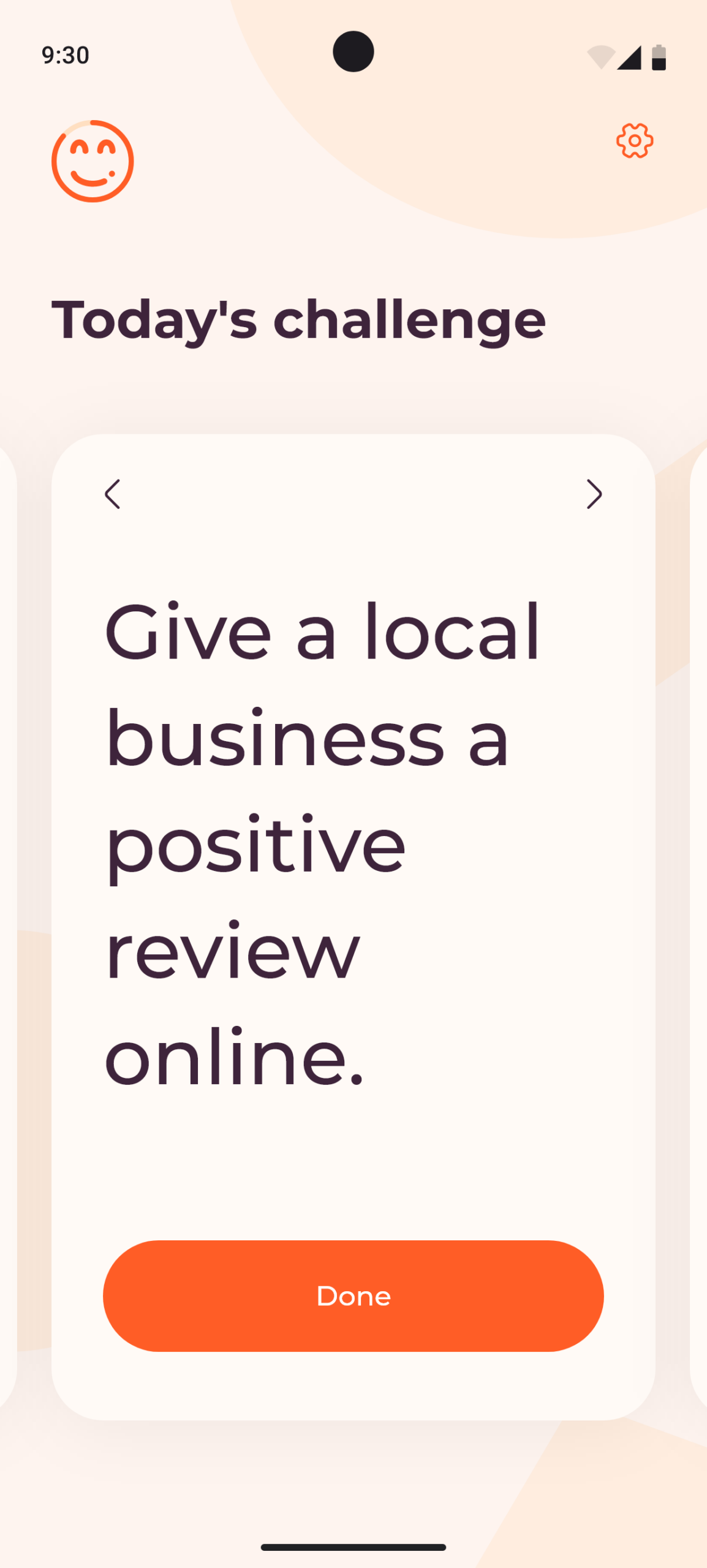
Users receive a new challenge each day via push notification. The experience is intentionally minimal and focused, with one main action per day to avoid overwhelming the user.
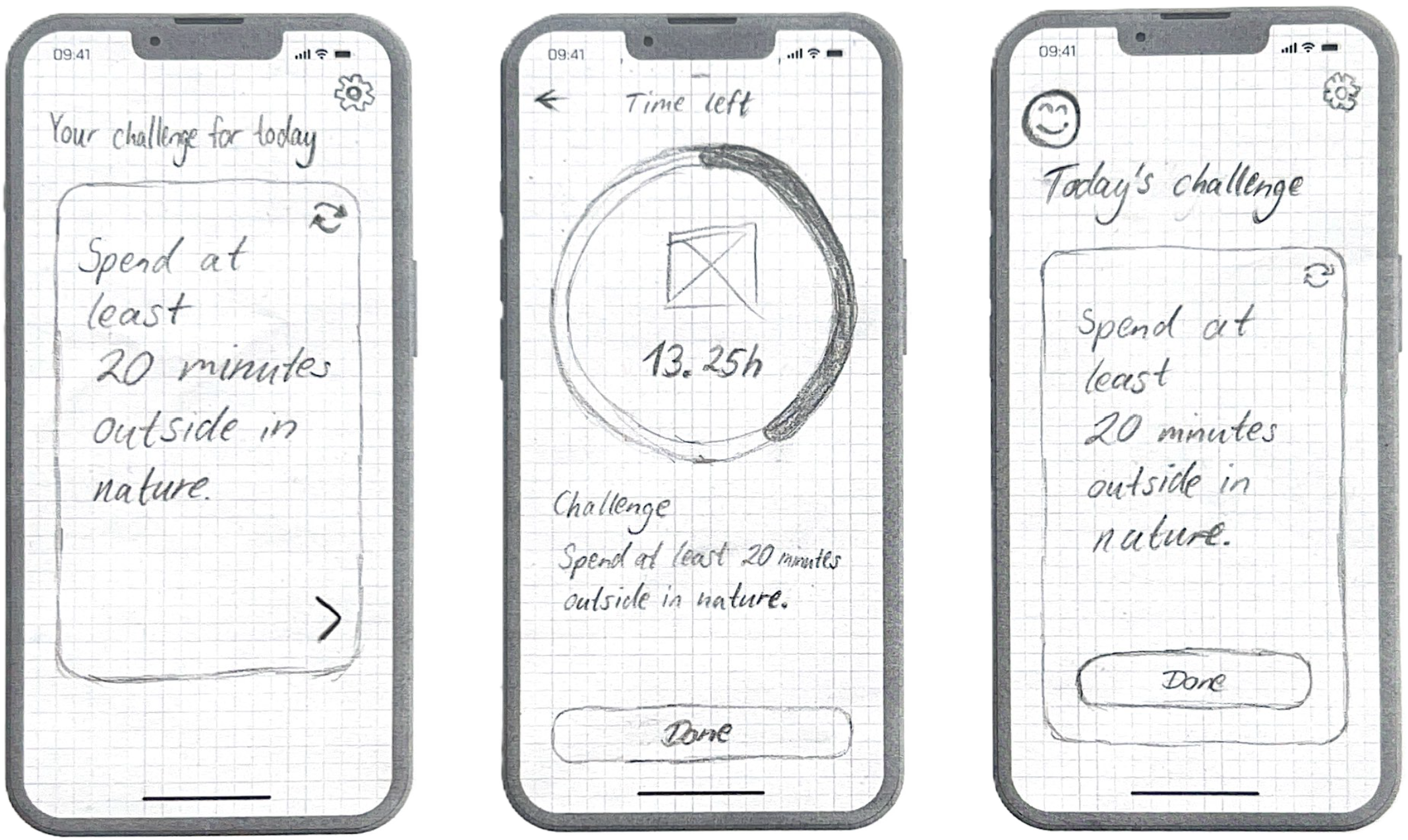
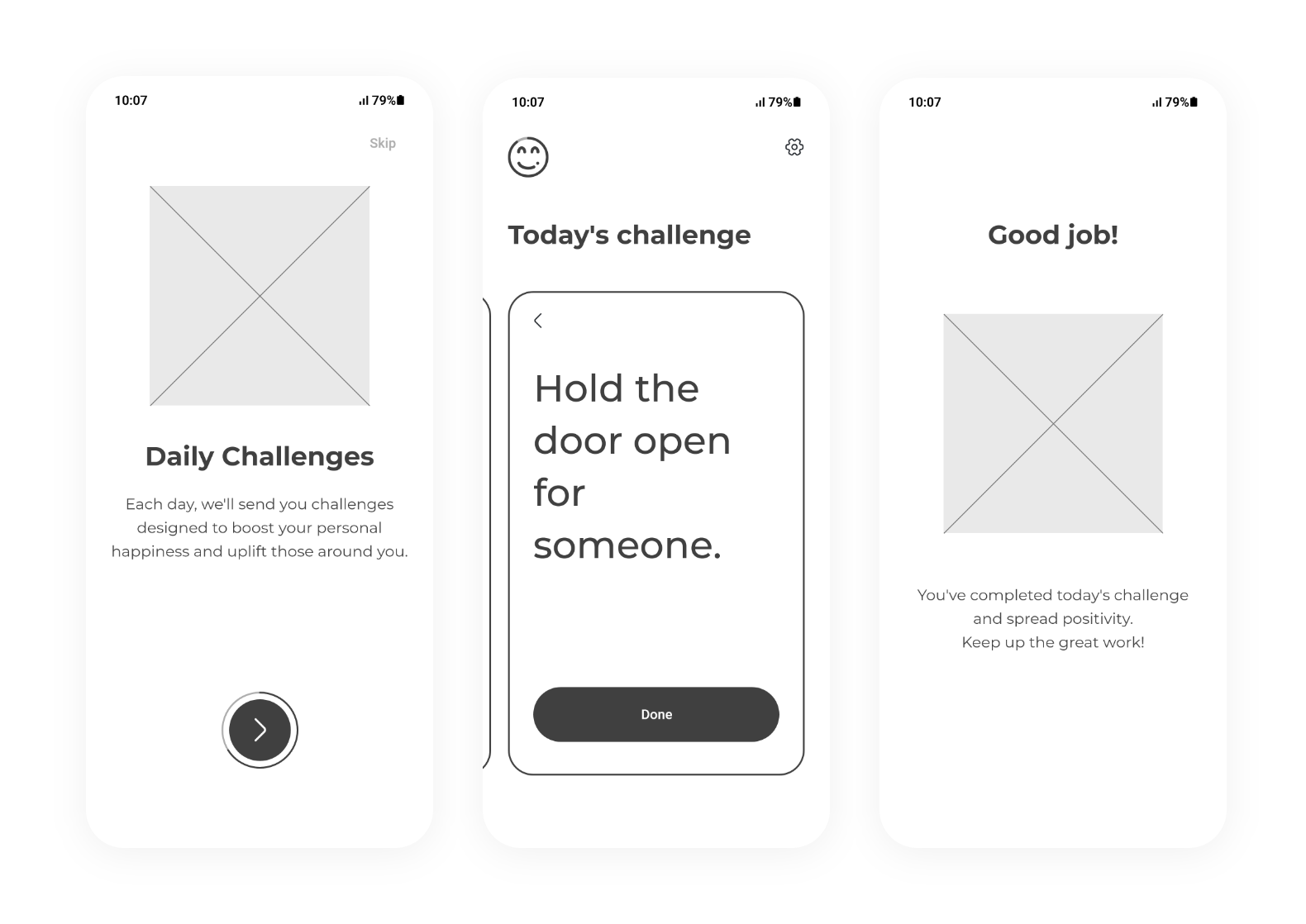
Wireframes
I created wireframes and translated them into a digital prototype in Adobe XD. Through regular feedback within the team, we refined the structure and interactions to keep the experience intuitive.
Design decisions were always guided by simplicity and clarity. Reducing complexity was key to making the app feel accessible and easy to use.
Branding
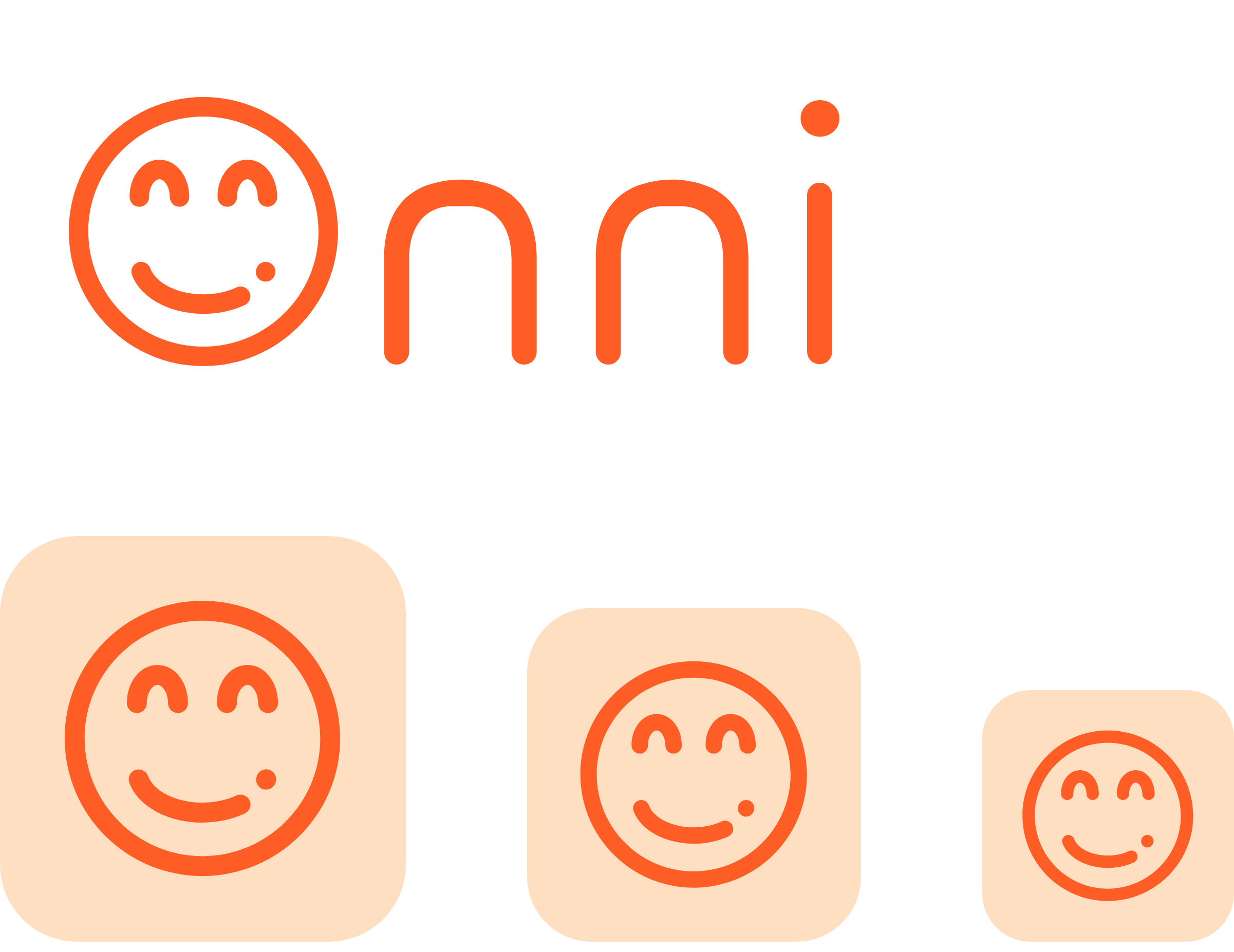
The branding reflects the idea of mindfulness and positivity.
The logo symbol is minimal, with a subtle integration of the wordmark, allowing it to work both as a logo and app icon. The visual language uses soft shapes and flat illustrations to create a friendly and approachable tone.
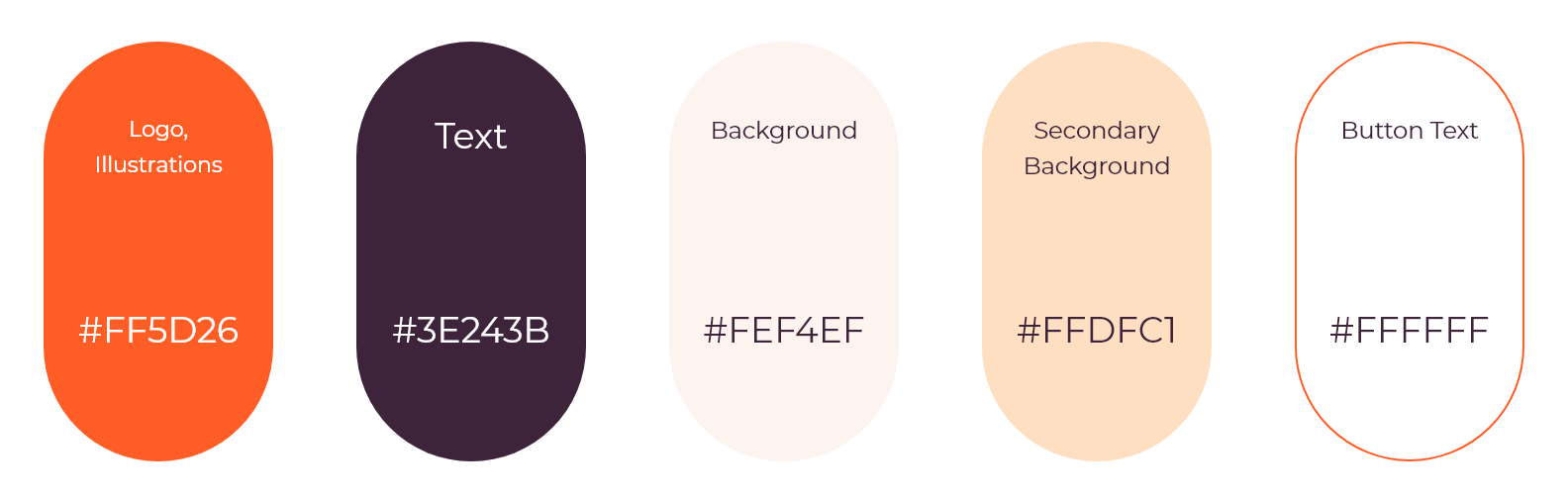
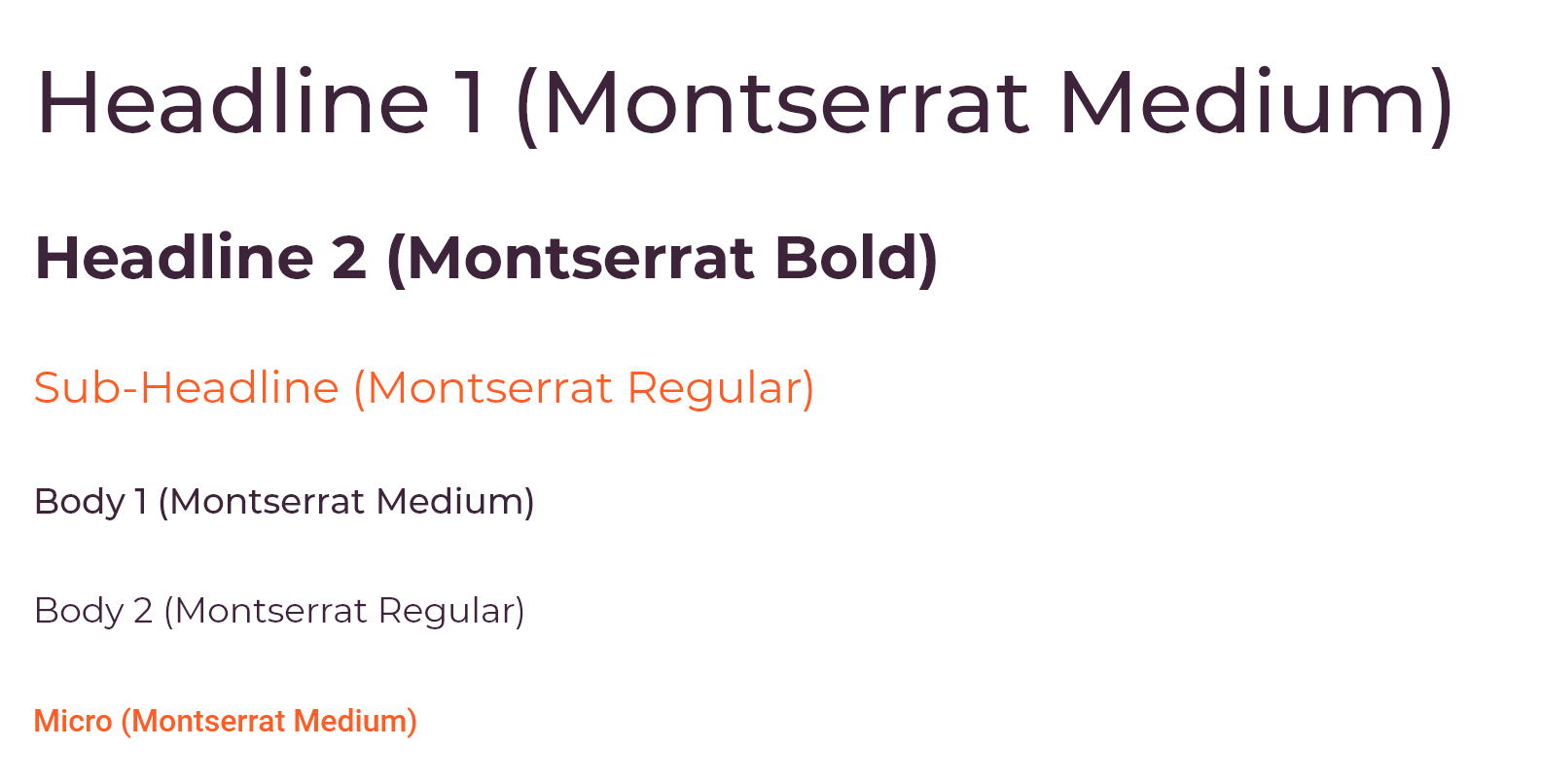
A warm color palette with orange tones supports the idea of energy, curiosity, and positivity. Typography is clean and modern, ensuring readability and consistency.
Final UI Design
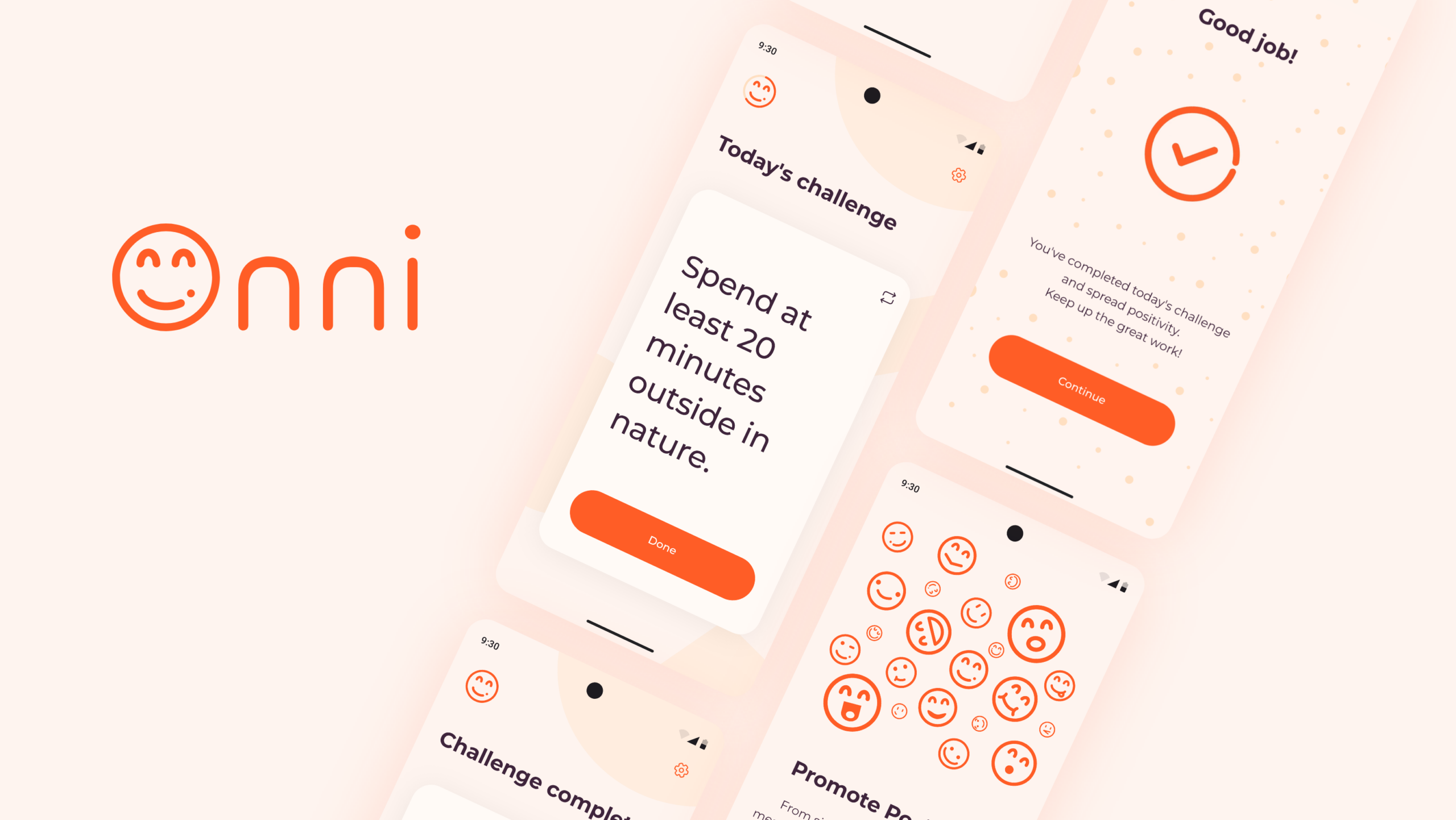
The final design focuses on a clean and minimal interface.
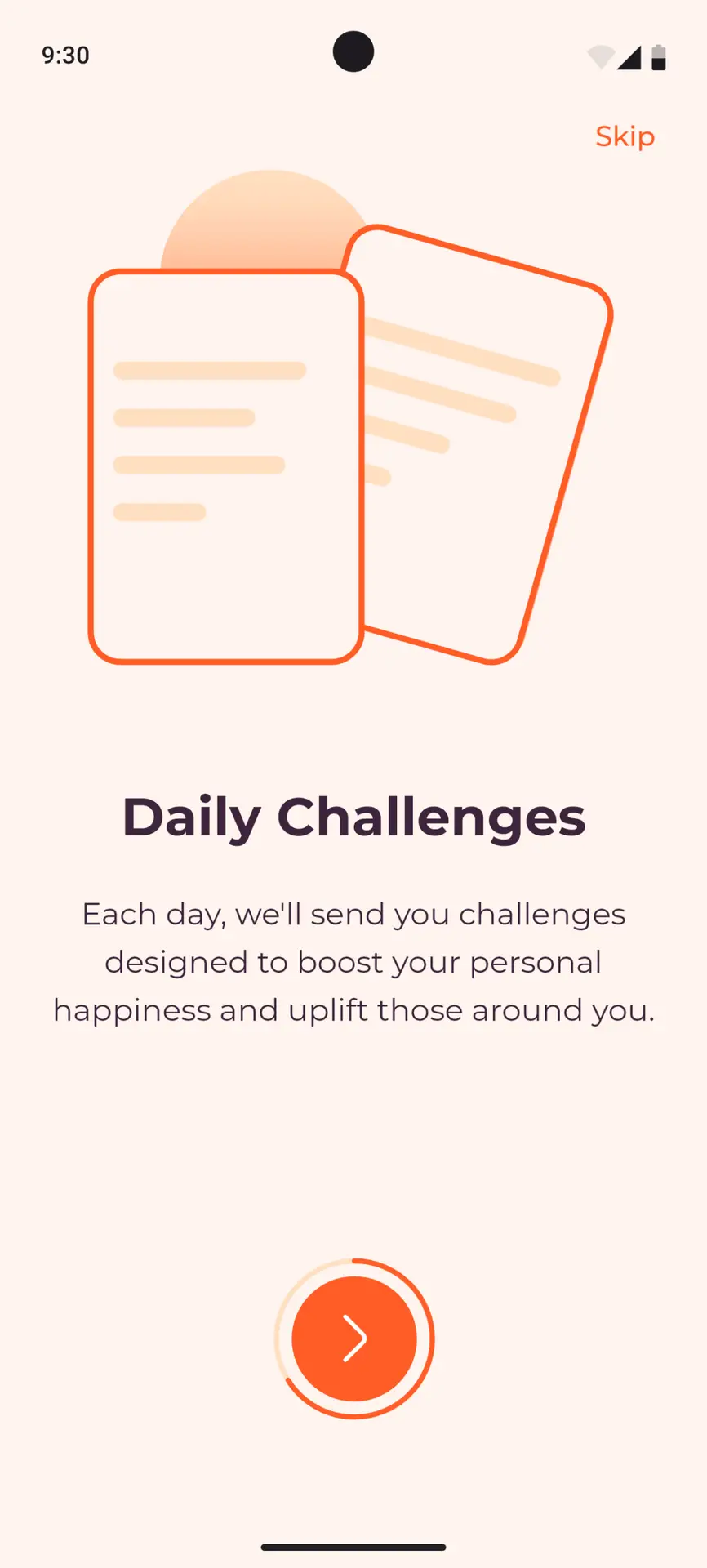
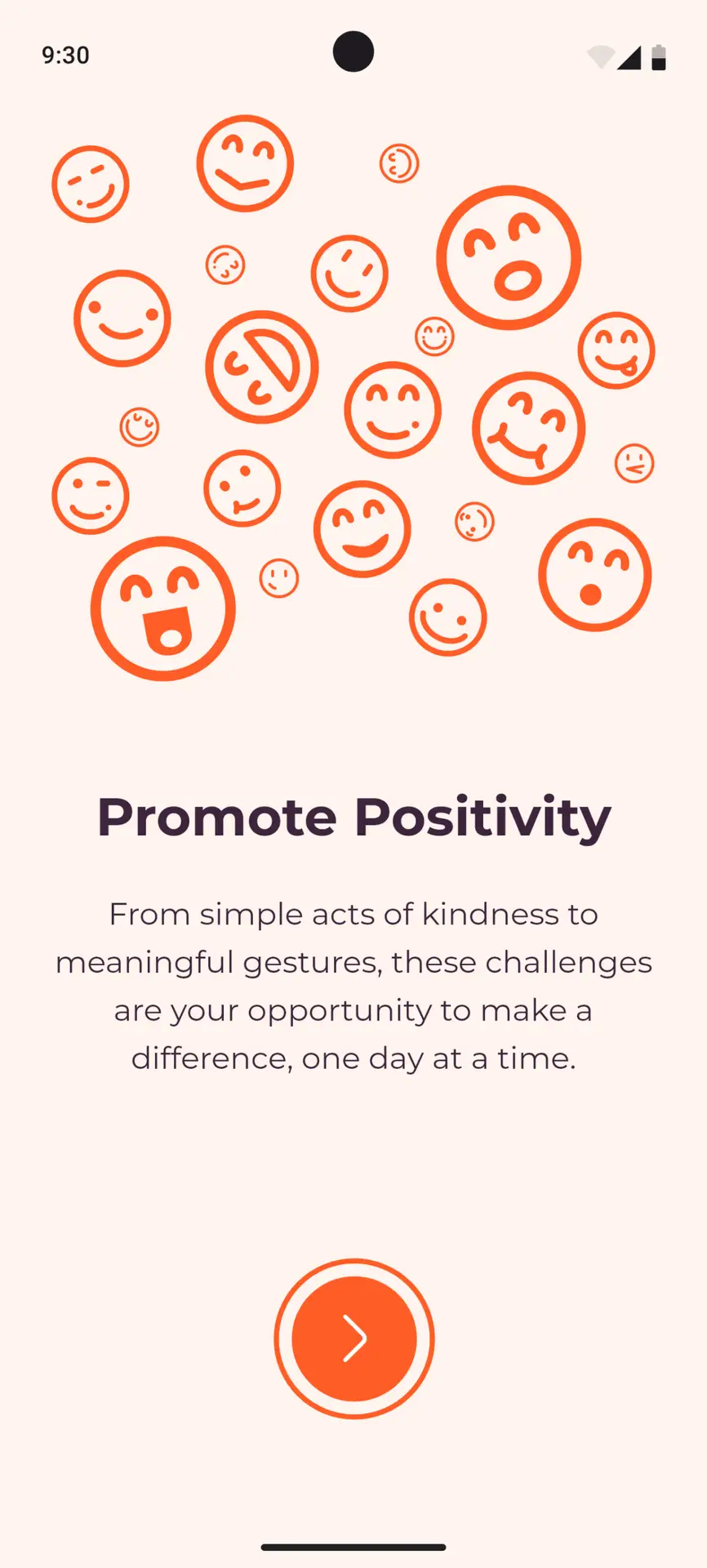
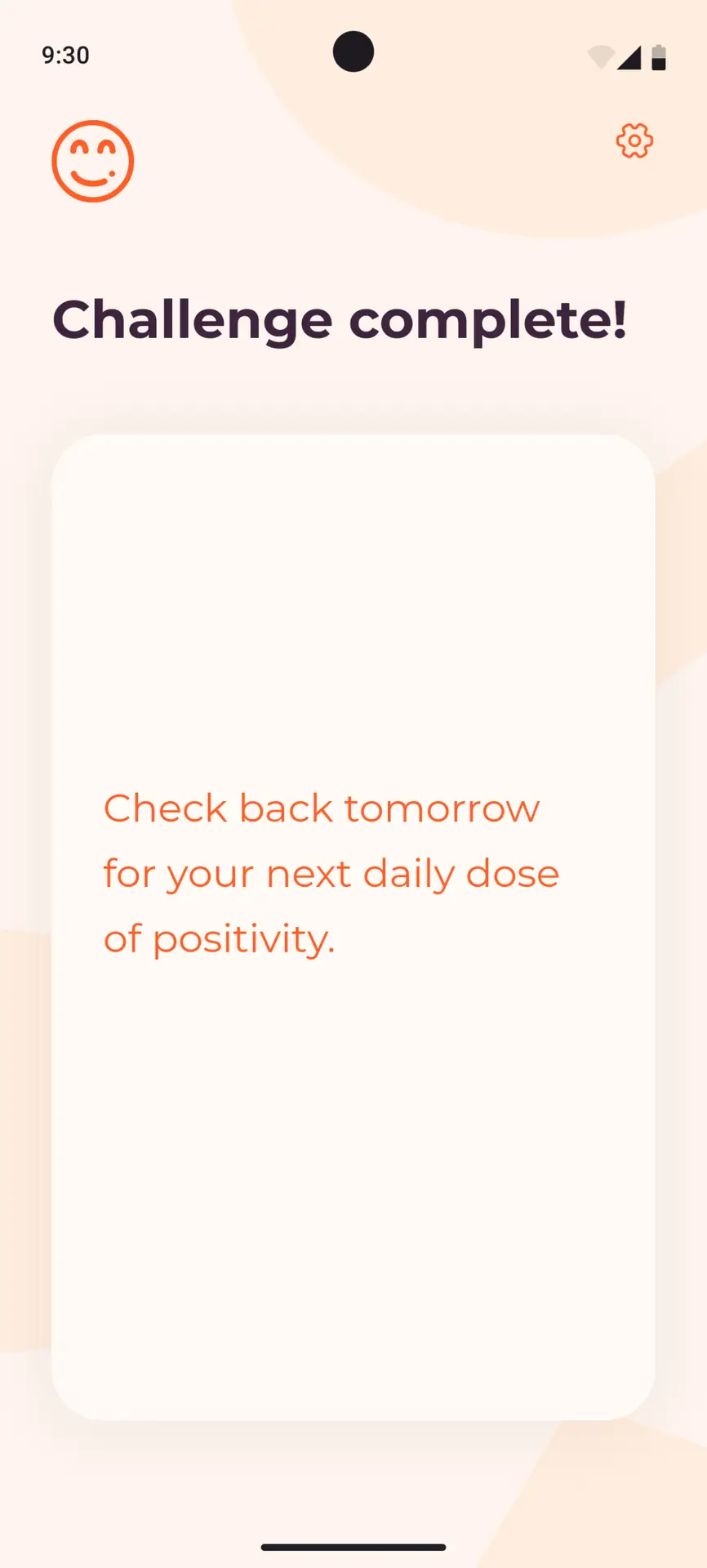
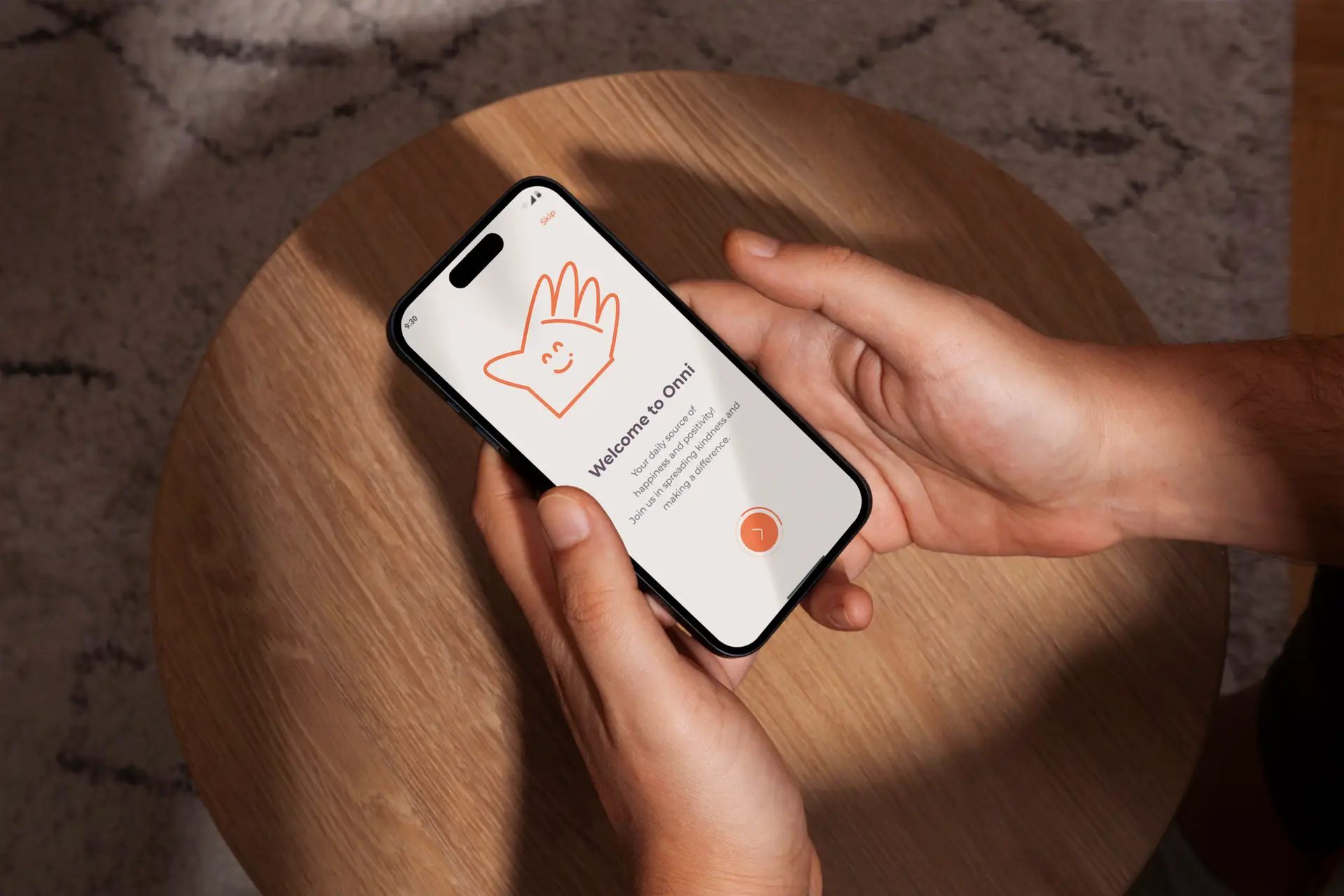
Users are guided through onboarding into a simple main screen showing the daily challenge. The interaction is reduced to the essentials, allowing users to focus on one action at a time.
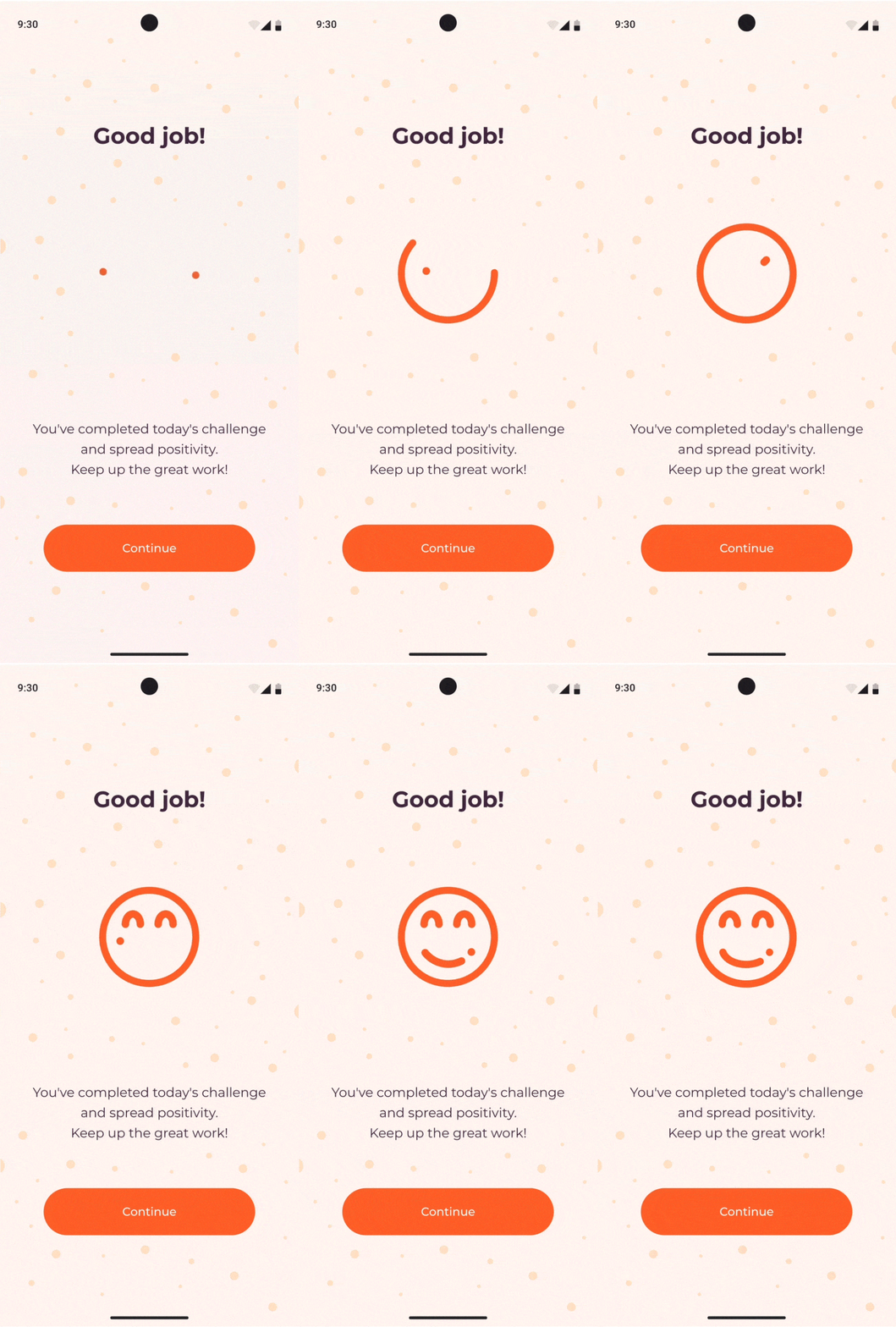
The system includes reusable components to ensure consistency across screens. Animations were used to enhance the experience, creating a sense of encouragement.
Outcome
The project resulted in a fully functional app, demonstrating what can be achieved within a relatively short timeframe.
During presentations, the app was well received, especially the focus on simplicity and the idea of integrating small positive actions into everyday life.
Reflection
What worked well was the clear focus on simplicity and the strong alignment within the team. Communication between project management, design, and development was smooth and helped us move efficiently through the process.
If I were to develop the project further, I would focus on more extensive user testing over a longer period and explore personalization of challenges to increase long-term engagement.
One key learning for me was that simplicity is often more impactful than complexity, and that strong concepts come from a clear understanding of user needs.